
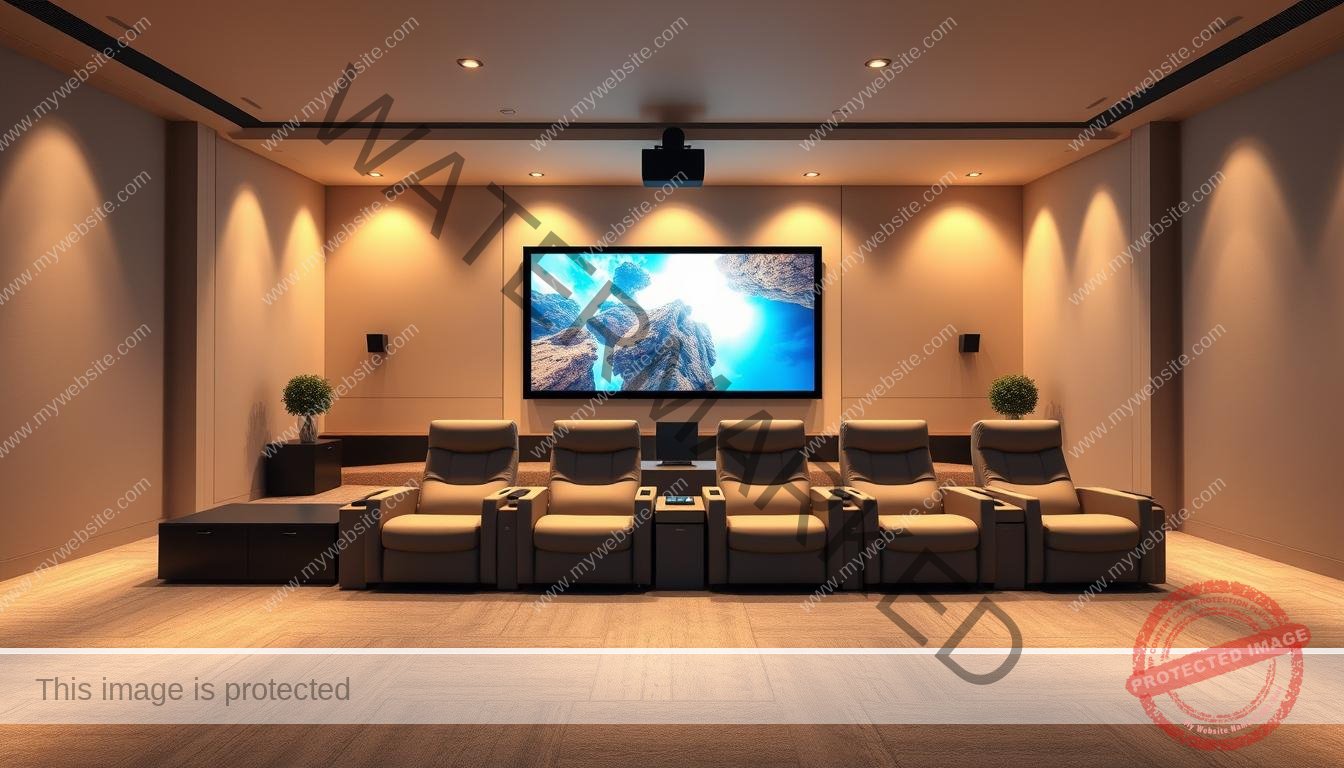
We’re on the cusp of a revolution in home entertainment, and it’s all about delivering an unforgettable viewing experience. With advancements in technology, watching movies at home is becoming increasingly sophisticated, rivaling the cinematic experience.
The introduction of My 8K technology is transforming how we enjoy our favorite films, offering a level of detail and clarity previously unimaginable. This cutting-edge resolution is setting a new standard for home entertainment, making it an exciting time for movie enthusiasts.
As we explore the world of 8K, it becomes clear that this technology is not just an incremental improvement but a significant leap forward in enhancing our viewing experience and overall quality of entertainment.
Key Takeaways
- Discover how My 8K technology is revolutionizing home entertainment.
- Understand the benefits of upgrading to 8K resolution for an enhanced viewing experience.
- Learn about the current landscape of 8K technology and its growing relevance.
- Find out what to expect from this comprehensive guide to 8K movie viewing.
- Get insights into whether now is the right time to invest in 8K technology.
Understanding 8K Resolution: The Next Level of Visual Clarity
8K resolution represents a significant leap forward in display technology, offering unparalleled visual clarity. This advancement is not just an incremental improvement but a substantial leap in the quality of the viewing experience.
What Makes 8K Different from 4K and HD
8K resolution is defined by its display resolution of 7680 x 4320 pixels, amounting to approximately 33.2 megapixels per frame. This is four times the resolution of 4K video and 16 times that of standard HD. To put this into perspective, it’s equivalent to combining 16 1080p HD TVs into one display. The level of detail is so intense that it creates an almost three-dimensional effect without the need for special glasses.
The difference between 8K and its predecessors can be understood by comparing their pixel densities. The higher pixel density in 8K resolution results in a more immersive viewing experience.
| Resolution Standard | Resolution | Megapixels per Frame | Comparison to 8K |
|---|---|---|---|
| HD | 1920 x 1080 | 2.1 | 16 times less than 8K |
| 4K | 3840 x 2160 | 8.3 | 4 times less than 8K |
| 8K | 7680 x 4320 | 33.2 | – |
The Technical Specifications Behind 8K
The technical specifications that make 8K possible include advanced display technologies and robust processing capabilities. These technologies enable the handling of the vast amount of data required for 8K content, ensuring a smooth and high-quality viewing experience.

As we continue to explore the capabilities of 8K resolution, it becomes clear that its enhanced detail transforms the movie-watching experience, particularly for films with rich visual elements.
The Current State of My 8K for Movies

The availability of native 8K content is a crucial factor in the adoption of 8K technology. As we explore the current state of 8K movies, it’s clear that native 8K content is still relatively scarce.
Limited Native 8K Content: What’s Available Now
Currently, real-time streaming 8K live video is particularly challenging due to the massive bandwidth and sophisticated compression technology required. However, platforms like YouTube support 8K uploads, and a few streaming services are experimenting with 8K content.
Although it’s not yet mainstream, the growth of native 8K content is evident. This mirrors the early days of 4K, which took several years to become widely available after 4K TVs hit the market.
Early Adopters in the Film Industry
The film industry is gradually embracing 8K production. The first film to be shot in 8K was James Gunn’s “Guardians of the Galaxy Vol. 2” in 2017. Major studios and content creators are beginning to adopt 8K cameras and production techniques to future-proof their content.
As the industry continues to adopt 8K technology, we can expect to see more native 8K content available in the coming years.
How AI Upscaling Enhances Your Viewing Experience
While native 8K content is still in its infancy, 8K TVs are leveraging AI upscaling to enhance the viewing experience. This technology is crucial for maximizing the potential of 8K TVs, given the current limited availability of native 8K content.
The Technology Behind 8K Upscaling
AI upscaling technology utilizes sophisticated processors with hundreds of neural networks to analyze and enhance lower-resolution content in real-time. This process involves complex algorithms that add detail and clarity to video that wasn’t visible in the original source material. The result is a significantly improved viewing experience, especially on large screens.
Comparing Upscaled Content to Native 8K
While upscaled content is not the same as native 8K, the difference is often negligible, particularly on larger TVs. A comparison between upscaled 4K and native 8K content reveals that the visual quality is remarkably similar, thanks to advanced upscaling technology. However, there are limitations to upscaling, and the quality can vary depending on the source material and the TV’s processing power.
| Content Type | Upscaling Technology | Visual Quality |
|---|---|---|
| Native 8K | N/A | Excellent |
| Upscaled 4K | AI-powered | Very Good |
| Upscaled 1080p | AI-powered | Good |
As upscaling technology continues to evolve, we can expect the gap between upscaled and native 8K content to narrow further, enhancing our overall viewing experience.
Essential Requirements for Optimal 8K Movie Viewing
For an optimal 8K movie viewing experience, several essential requirements need to be fulfilled. These include having the right screen size, a fast internet connection, and compatible hardware.
Recommended Screen Sizes for 8K TVs

To fully appreciate the difference that 8K resolution offers, a very large screen size is necessary. Displays of 75 inches and larger are recommended because they can maintain crystal-clear image quality at such large sizes.
Internet Connection Requirements for 8K Streaming

A fast and reliable internet connection is crucial for smooth 8K streaming. We recommend installing a fiber connection to ensure real-time streaming of 8K content without buffering.
Additional Hardware Considerations
Besides a large 8K TV and a fast internet connection, other hardware considerations include compatible media players, HDMI 2.1 cables, and appropriate audio equipment to complete the home theater experience. Major manufacturers like LG, Sony, and Samsung have introduced 8K TV models with advanced features such as quantum technology for brighter displays and enhanced color quality.
The Future of 8K Entertainment
With advancements in technology, the future of 8K entertainment is becoming increasingly promising. As we move forward, several factors will contribute to the growth and adoption of 8K content.

Upcoming 8K Content and Releases
The entertainment industry is gradually shifting towards 8K production. Major film studios are already shooting in 8K resolution, even if they’re not yet releasing their content in that format. This trend is expected to continue, with more 8K content being produced and released over the next few years.
We can expect to see more 8K cameras being used in film production, allowing for even more high-quality content to be created. As the technology improves, we will likely see an increase in 8K videos being broadcast and streamed.
How 5G Will Transform 8K Accessibility
The introduction of 5G technology will play a significant role in making 8K content more accessible. With its unparalleled connection speeds, greater capacity, and lower latency, 5G will enable seamless streaming and downloading of high-resolution 8K videos. This will be particularly beneficial for gaming, where low latency is crucial.
As 5G networks roll out in numerous countries, we can expect to see a significant improvement in the way 8K content is consumed. The enhanced bandwidth and reduced latency will make it easier for users to stream 8K videos without interruptions, paving the way for a more widespread adoption of 8K technology.
Conclusion: Is Investing in 8K Worth It Right Now?
The allure of 8K resolution is undeniable, but the question remains: is it worth investing in now, given the current limitations in content and the high price tag? Currently, there’s not enough native 8K content to fully utilize 8K displays. However, for those comfortable with upscaling, investing in 8K now could mean being ahead of the curve as more content becomes available in the future.
We recommend considering your specific needs and viewing habits. For gaming enthusiasts with high-end PCs or film industry professionals, 8K might offer significant benefits today. For others, waiting for prices to drop and content availability to improve might be the more prudent approach.


